Loading...

Types of Coatings

Types of Powder Paints


1. Epoxy Powder Coatings

Best suited for indoor applications requiring excellent chemical and corrosion resistance. Commonly used on appliances, automotive parts, and metal furniture. Offers a smooth, glossy finish and superior adhesion. Ensures long-lasting protection.

View Detail

2. Polyester Powder Coatings

Ideal for outdoor use due to outstanding UV and weather resistance. Widely used in architectural aluminum extrusions, automotive trim, and outdoor furniture. Available in a variety of textures and finishes from matte to high gloss.

View Detail

3. Hybrid Powder Coatings

Combines the chemical resistance of epoxy with the UV resistance of polyester. Suitable for indoor items exposed to mild outdoor conditions. Frequently applied on appliances, office furniture, and metal cabinets. Provides a smooth, durable finish that enhances protection.

View Detail

Our Powder Coating Types
Epoxy Powder Coating

Epoxy Powder Coating

Epoxy powder coating is a high-performance, thermoset coating made from epoxy resins. These resins consist of long-chain polymers composed of carbon, hydrogen, oxygen, and sometimes nitrogen. Through covalent bonding, these chains form a strong, durable structure that provides exceptional adhesion, chemical resistance, and mechanical strength.

Unlike liquid paints, epoxy powder coatings are solvent-free, environmentally friendly, and provide uniform coverage without dripping or sagging. They are ideal for protective and functional coatings, offering a hard, flexible surface that withstands wear and chemical exposure. However, epoxy coatings are not recommended for prolonged outdoor exposure as ultraviolet (UV) light can cause chalking and color degradation over time.

  • Epoxy resin: Created through polymerization or combining a catalyst with resin hardeners.
  • Curing agents: Solidify the coating to increase durability.
  • Additives: Provide various functions like hardened finish and reduced surface tension.
  • Post additives: Added after powder hardens to prevent caking.
  • Tint pigments: Provide color to the coating.
  • Extenders: Fillers that add durability while reducing gloss.

  • Polymerization and Resin Preparation: Epoxy resins are polymerized and blended with hardeners and additives.
  • Cooling and Flaking: The molten mixture is cooled on a steel belt and then crushed into fine flakes.
  • Extrusion: The flakes are combined with pigments, fillers, and other additives in an extruder under controlled heat and pressure to ensure uniform dispersion.
  • Milling: The extruded material is cooled and milled to the desired particle size suitable for electrostatic spraying.
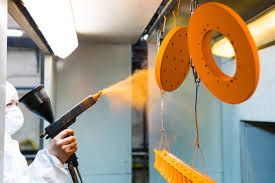
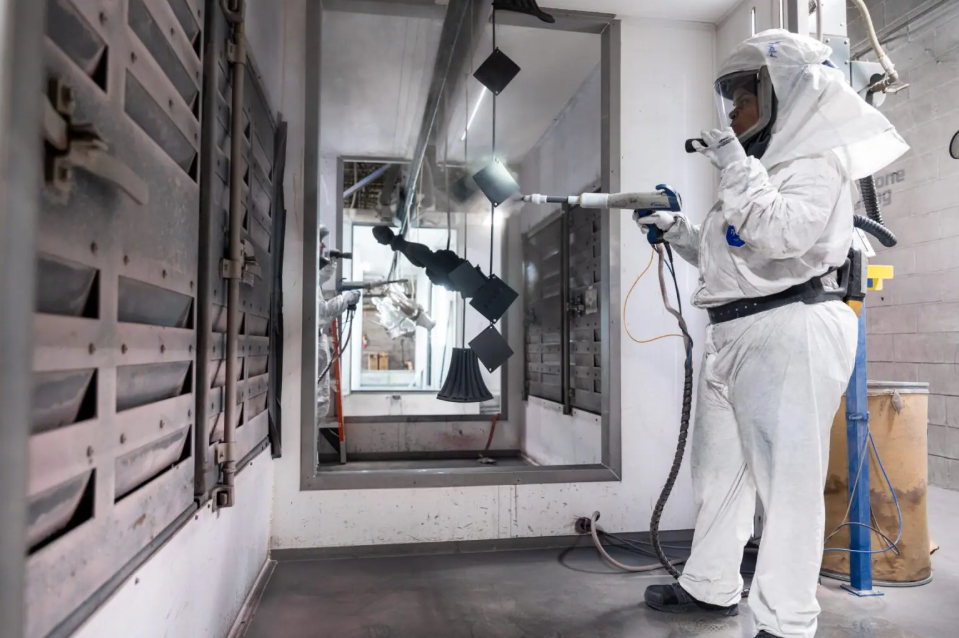
  • Application: Powder is applied to electrically grounded metal surfaces using a powder spray gun. The charged particles adhere evenly to the surface.
  • Curing: Coated items are baked in an oven, where the powder melts, flows, and chemically reacts to form a solid, durable coating.

  • Industrial Equipment
  • Appliances
  • Automotive Parts
  • Metal Furniture
  • Electronics

  • Solvent-Free & Low VOCs
  • Durable & Chemical-Resistant
  • Uniform Application
  • Cost-Effective
  • Easy to Handle

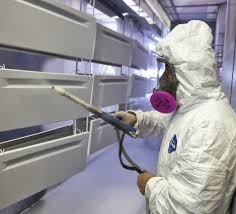
Always wear protective gear during application and ensure proper ventilation.

  • Custom Colors and Finishes
  • Consistent Quality
  • Technical Support
  • Bulk & Trial Packaging
  • Eco-Friendly Manufacturing

Polyester Powder Coating

Polyester Powder Coating

Polyester Powder Coating

Polyester powder coating is a durable thermoset coating made from polyester resins. These resins are synthetic polymers that provide excellent weather, UV, and corrosion resistance, making them ideal for both indoor and outdoor applications.

Polyester coatings are highly resistant to UV light, corrosion, and weathering. They provide smooth, glossy finishes and excellent color retention even in harsh outdoor environments. Polyester powders are also low-maintenance and environmentally friendly.

  • Polyester Resin: Provides the base polymer with UV and weather resistance.
  • Curing Agents: Allow cross-linking to harden the coating.
  • Additives: Enhance flow, smoothness, and durability.
  • Post Additives: Prevent clumping and improve storage stability.
  • Tint Pigments: Add desired color and opacity.
  • Fillers/Extenders: Improve thickness, hardness, and surface finish.

  • Resin Preparation: Polyester resin is blended with curing agents, pigments, and additives.
  • Cooling & Flaking: The mixture is cooled and broken into fine flakes.
  • Extrusion: Flakes are extruded under heat and pressure to achieve uniform particle size.
  • Milling: Powder is ground to the desired size suitable for electrostatic spraying.
  • Application: Powder is sprayed onto grounded metal surfaces with a spray gun.
  • Curing: Coated items are baked in an oven where powder melts and forms a hard, durable layer.

  • Architectural Aluminum: Window frames, doors, and facades.
  • Outdoor Furniture: Metal benches, tables, and chairs.
  • Appliances: Outdoor HVAC units, metal cabinets, and panels.
  • Automotive Parts: Non-critical exterior parts exposed to weather.
  • Industrial Equipment: Machinery housings and metal frameworks.

  • Solvent-Free & Low VOCs: Eco-friendly and safe for operators.
  • Excellent UV & Weather Resistance: Ideal for outdoor exposure.
  • Durable & Scratch-Resistant: Long-lasting finish for metal surfaces.
  • Uniform & Smooth Application: Reduces maintenance costs.

Always wear protective gear (mask, gloves, goggles) and ensure proper ventilation.

  • Custom Colors and Finishes: Wide range of UV-resistant colors.
  • Consistent Quality: Tested for adhesion, gloss, and thickness.
  • Technical Support: Guidance on surface preparation and application.
  • Bulk & Trial Packaging: Available for testing and production.
  • Eco-Friendly Manufacturing: Meets environmental standards with high performance.

Epoxy-Polyester Hybrid Powder Coating

Epoxy-Polyester Hybrid Powder Coating

Epoxy-Polyester Hybrid Powder Coating

Hybrid powder coatings combine the chemical resistance of epoxy with the UV resistance of polyester, offering a balanced solution for both indoor and limited outdoor applications.

Hybrid coatings offer excellent adhesion, chemical resistance, and a smooth, glossy finish. They are suitable for indoor items exposed to mild outdoor conditions. UV stability is better than pure epoxy but less than polyester.

  • Epoxy Resins: Provide chemical resistance and adhesion.
  • Polyester Resins: Provide UV resistance and weather stability.
  • Curing Agents: Help cross-link both resins for hardness.
  • Additives & Post Additives: Improve flow, finish, and prevent caking.
  • Tint Pigments: Give desired colors.
  • Extenders/Fillers: Improve durability and reduce gloss if required.

  • Resin Blending: Epoxy and polyester resins are blended with curing agents, pigments, and additives.
  • Cooling & Flaking: The mixture is cooled and crushed into fine flakes.
  • Extrusion: Flakes are extruded under heat and pressure for uniform dispersion.
  • Milling: Powder is ground to desired particle size suitable for electrostatic application.
  • Application: Sprayed onto grounded metal surfaces.
  • Curing: Powder melts and cross-links in an oven forming a tough, durable coating.

  • Appliances: Washing machines, ovens, and HVAC components.
  • Office Furniture & Cabinets: Provides chemical resistance and durability.
  • Industrial Equipment: Parts that require moderate UV exposure protection.
  • Automotive Parts: Interior frames, small components not constantly exposed to sun.

  • Solvent-Free & Low VOCs: Eco-friendly and safe for operators.
  • Balanced Chemical & UV Resistance: Suitable for indoor & mild outdoor exposure.
  • Durable & Scratch-Resistant: Long-lasting finish for metal surfaces.
  • Uniform Coverage: Reduces maintenance and repair costs.

Wear protective gear and ensure proper ventilation during application.

  • Custom Colors & Finishes: Wide variety of hybrid colors with UV stability.
  • High-Quality Consistency: Tested for adhesion, impact, and gloss.
  • Technical Support: Guidance on surface prep, application, and curing.
  • Flexible Packaging: Available in trial or bulk quantities.
  • Eco-Friendly Manufacturing: Meets environmental standards without compromising performance.